Ways to Begin Capacity-Based Medicine.
Comprehensive physician-led pathways and focused diagnostic or treatment entry points. The right place to begin depends on what is limiting you and how much support is required.
Comprehensive Pathways
Performance Pathway
A structured, physician-led program that identifies the Primary Restraint, establishes a focused intervention strategy, and reassesses objective progress over 90 days.
Explore Performance Pathway
Legacy Pathway
An ongoing physician relationship for proactive management of performance, hormones, healthy aging, risk, recovery, and long-term physiologic capacity.
Explore Legacy PathwayFocused Entry Points

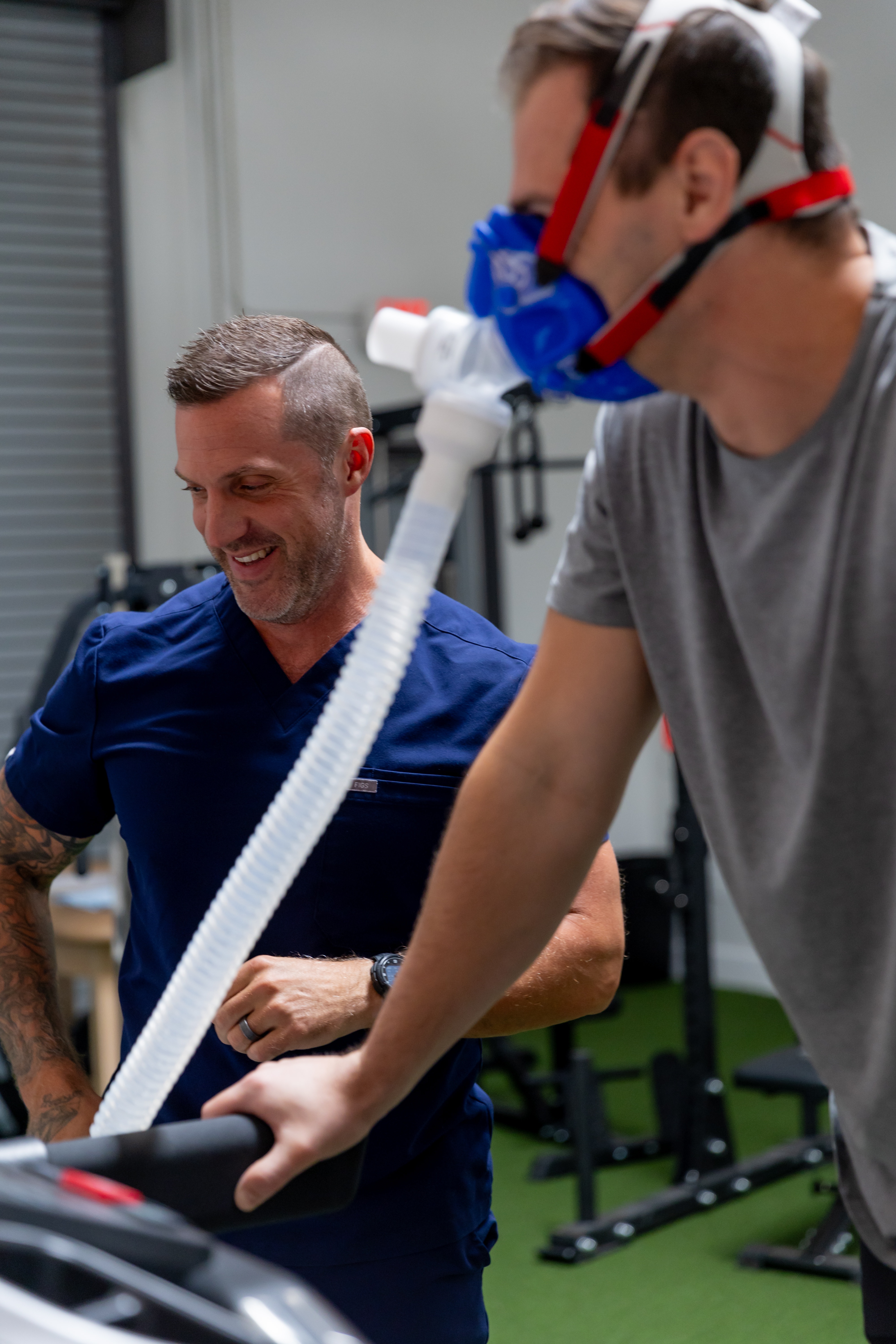
Metabolic Capacity Assessment
Physician-interpreted resting and exercise metabolic testing measuring aerobic capacity, thresholds, fuel utilization, conditioning, and recovery.
Explore Metabolic Testing
Pain + Tissue Care
Focused evaluation and treatment for pain, tendon dysfunction, chronic soft-tissue injury, and impaired tissue recovery. Care may include shockwave, PRP, or other regenerative procedures when clinically appropriate.
Explore Pain + Tissue CareWhich Entry Point Fits?
Choose the Performance Pathway when
- Several concerns are interacting
- You need a focused 90-day plan
- You want testing, treatment, and reassessment
- You are seeking measurable change now
Choose the Legacy Pathway when
- You want year-round physician oversight
- Long-term health, hormones, performance, or aging are the priority
- You need continued monitoring and strategic adjustment
- You are building after initial correction
Choose the Metabolic Capacity Assessment when
- You primarily want objective data on metabolism, VO2, fuel use, or thresholds
- Your central uncertainty is how your body produces and uses energy
- You are not yet sure whether a full pathway is necessary
Choose Pain + Tissue Care when
- Pain or localized tissue dysfunction is the clear immediate barrier
- You need focused evaluation and treatment
- A broader systemic assessment is not currently the first priority
Clinical tools may include
Tools are selected according to the restraint. They are not standalone definitions of care.
Not sure where to start?
Use our guided process to identify the right entry point into Capacity-Based Medicine.
Start Here